Alibaba Qwen team ships three foundation models for robot navigation, manipulation, and world modeling
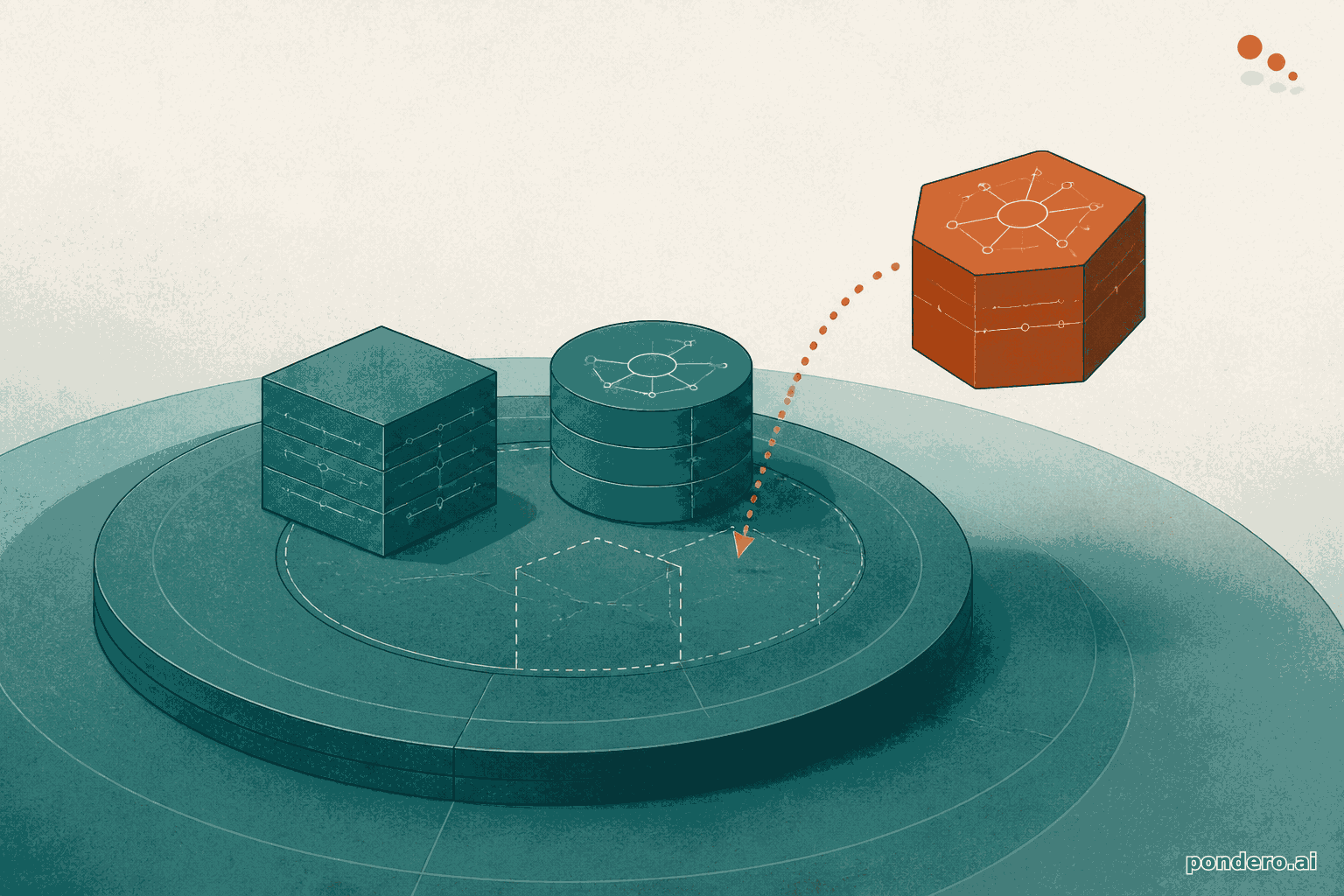
Alibaba's Qwen AI research team released the Qwen-Robot Suite on June 16, 2026. The suite bundles three specialized foundation models: one for autonomous navigation, one for robotic arm control, and one for physical world scene understanding.
What the three models do
Each model targets a distinct layer of robot operation.
Qwen-RobotNav handles target tracking and autonomous driving. Built on Qwen3-VL and trained on 15.6 million samples, it lets a robot follow natural language instructions to reach specified locations or track moving targets, per Gigazine's coverage of the Qwen blog announcements. It is designed for operation in unfamiliar environments without requiring location-specific pre-programming.
Qwen-RobotManip controls robotic arms through open-ended instructions. Based on Qwen3.5-4B VL and trained on more than 38,100 hours of data, the model can operate manipulators with different physical configurations, varying arm lengths and joint counts, without requiring a pre-defined task list for each hardware variant.
Qwen-RobotWorld provides scene understanding and physical world modeling. The model uses a visual language backbone to represent environments in natural language, enabling downstream tasks such as generating arm movements from a video of a human performing the same task, or producing spatially and temporally consistent multi-angle video from a single instruction.
All three models are described as pilot-stage deployments. Per Alibaba, selected Alibaba Cloud enterprise customers in manufacturing, logistics, and semiconductor production are testing them.
Enterprises can retrain one robot model without rebuilding all
The Qwen-Robot Suite is one of the first public releases to decompose physical robotics into three separately trainable foundation models, each addressing a distinct capability gap. Most prior embodied AI work has either pursued a single general-purpose policy or kept individual skills siloed within hardware-specific pipelines. Releasing three modular models allows enterprises to swap or retrain individual components as their hardware fleets change, rather than rebuilding a monolithic system.
The timing places Alibaba in a crowded field. Google, Figure AI, and Boston Dynamics each released robot-foundation models in the same quarter of 2026. But the Qwen team's approach, building on Qwen3-VL as a shared visual language substrate across the suite, signals that general-purpose vision-language model capacity is becoming the common backbone for physical AI in the same way transformer checkpoints anchored the prior generation of robot learning work.
For AI tool users who follow the agent-to-robot trajectory, Qwen-RobotManip's open-instruction design is the most immediately actionable detail. It suggests that the barrier between an LLM-driven agent generating a task plan and a robot arm executing it is narrowing to a single inference call.
What to watch next
Alibaba has not announced a general availability timeline or confirmed whether any of the three models will ship as open weights on Hugging Face. The pilot program's scope, currently limited to manufacturing, logistics, and semiconductor customers, will determine how quickly independent benchmarks emerge to validate the training data claims.
Sources
- Qwen-Robot Suite: A Foundation Model Suite for Physical World Intelligence: Qwen official blog, June 16 2026
- Qwen-RobotNav: A Scalable Navigation Model Designed for an Agentic Navigation System: Qwen official blog, June 16 2026
- Qwen-RobotManip: Alignment Unlocks Scale for Robotic Manipulation Foundation Models: Qwen official blog, June 16 2026
- Alibaba announces Qwen-Robot Suite, a suite of AI models for automated robot operation: Gigazine, June 17 2026